Influenza A Is Surging – What You Need to Know
Influenza A is placing significant pressure on healthcare services across Aotearoa New Zealand. With high levels of influenza circulating, it is important to know how to recognise the symptoms, reduce the spread of infection, look after yourself at home and understand when you should seek medical care.
At West Auckland Medical & Surgical Centre (WAMSC), we are also taking additional precautions to help protect our patients, staff and vulnerable members of our community.
How Do I Know If I Have Influenza?
Influenza often comes on suddenly and can make you feel much more unwell than a typical cold.
Common symptoms include:
- Fever and chills
- Headache
- Muscle and body aches
- Significant tiredness and weakness
- Cough
- Sore throat
- Runny or blocked nose
- Shortness of breath
- Vomiting or diarrhoea, particularly in children
One of the features that can distinguish influenza from a common cold is how quickly symptoms can develop. You may feel relatively well and then become very unwell within a few hours.
Not everyone with influenza will have every symptom, and symptoms can vary between people.
Why Is WAMSC Asking Patients With Respiratory Symptoms to Call First?
When influenza and other respiratory infections are circulating, reducing the spread of infection inside healthcare facilities is particularly important.
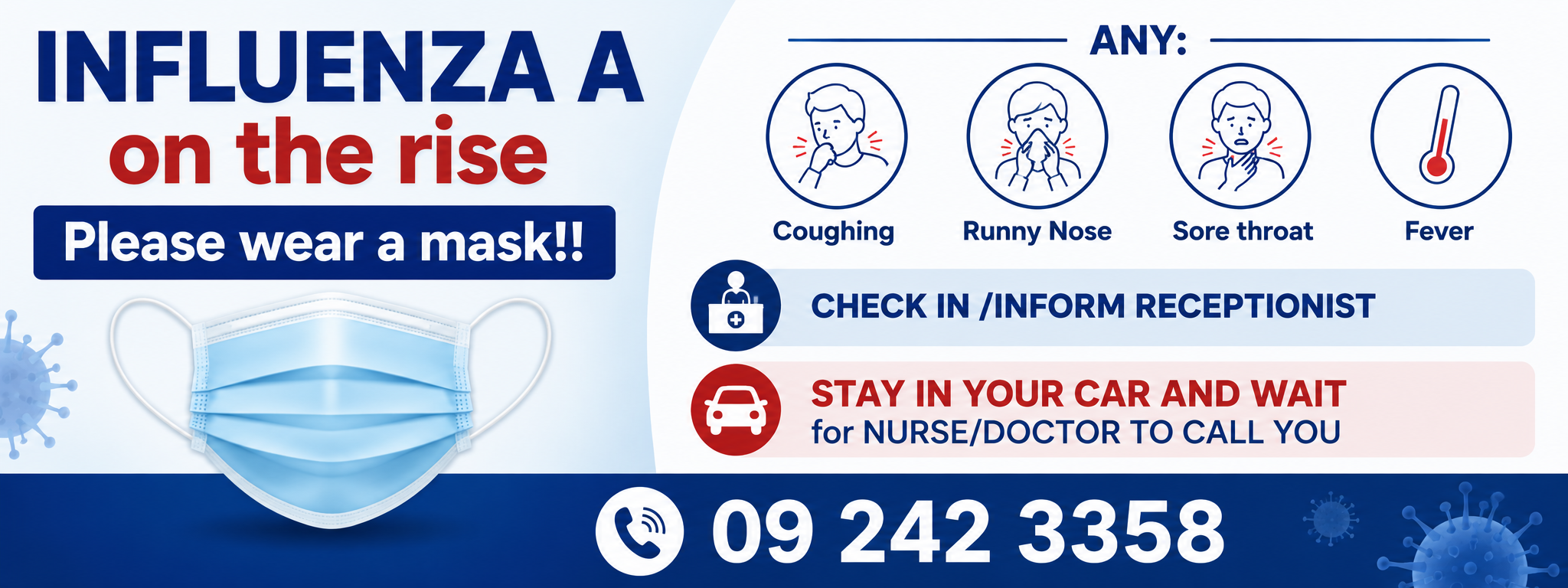
If you have flu-like or respiratory symptoms, please call WAMSC before coming into the clinic.
Our team may ask you some questions about your symptoms and may arrange a telephone or video consultation first. If you need to be seen in person, we will advise you on the safest way to attend.
If you are attending the clinic and are unwell:
- Please wear a mask before entering.
- Inform reception that you have respiratory or flu-like symptoms.
- You may be asked to return to your vehicle and wait there until a member of our team calls you in.
These precautions help protect babies, older people, pregnant patients, people with chronic health conditions and those with weakened immune systems.
How Long Does Influenza Last?
Influenza can leave you feeling unwell for a week or more. The most severe symptoms often improve over several days, but coughing, tiredness and weakness can sometimes continue for longer.
It is also highly contagious. Influenza spreads through respiratory droplets and close contact, and people may be able to spread the virus before they realise they are unwell.
If you have influenza symptoms, staying home and limiting close contact with others can help reduce transmission to your family, friends, colleagues and wider community.
What Should I Do If I Have Flu Symptoms?
For most otherwise healthy people, the first steps are straightforward:
Stay home and rest
Give your body time to recover. Avoid going to work, school or other activities while you are unwell.
Drink plenty of fluids
Fever, sweating, vomiting and diarrhoea can increase your risk of dehydration. Drink regularly throughout the day.
Manage your symptoms
Paracetamol or ibuprofen may help with fever, headaches and muscle aches when they are suitable for you. Follow the recommended dosage and check with a healthcare professional if you are unsure.
Reduce the spread
- Wash your hands regularly.
- Cover coughs and sneezes.
- Avoid sharing cups, utensils and towels.
- Keep indoor spaces well ventilated.
- Avoid close contact with vulnerable people while you are unwell.
When Should I Contact a Doctor?
Contact WAMSC or another healthcare provider if:
- Your symptoms are getting worse rather than improving.
- You are struggling to drink enough fluids.
- You are concerned about your breathing.
- You have a medical condition that puts you at greater risk of complications.
- You are pregnant.
- You are caring for a young child who is becoming increasingly unwell.
- You are older or have reduced immunity.
People at higher risk of complications from influenza include older adults, pregnant people, young children and people with certain ongoing health conditions.
If you are unsure about your symptoms or what level of care you need, you can also call Healthline on 0800 611 116, free of charge, 24 hours a day.
When Is Influenza an Emergency?
Influenza can occasionally lead to serious complications. Seek urgent medical attention if you or someone you care for becomes seriously unwell.
Call 111 immediately for a life-threatening emergency, including severe difficulty breathing, severe chest pain, collapse, significant confusion, blue or purple lips or skin, or if someone is extremely unwell.
Do not wait for a routine GP appointment when emergency medical care is required.
Is It Still Worth Getting the Flu Vaccine?
Yes. It is not too late to get vaccinated.
Influenza viruses change over time, which is why the influenza vaccine is updated each year. The 2026 Southern Hemisphere influenza vaccine available in New Zealand includes protection against circulating influenza A(H3N2) variants.
Vaccination remains one of the most important ways to reduce your risk of influenza and serious complications.
It is particularly important to consider vaccination if you are:
- Older
- Pregnant
- Living with an ongoing health condition
- Immunocompromised
- Caring for someone who is vulnerable
- A parent or caregiver of young children
Talk to our team to find out whether the flu vaccine is suitable for you and whether you may be eligible for a funded vaccination.
Where Should I Go If I Need Healthcare?
Choosing the right healthcare service helps you receive appropriate care while reducing pressure on emergency departments and other healthcare services.
For non-urgent health concerns
Contact WAMSC to discuss your symptoms and arrange the appropriate care.
For urgent but non-life-threatening problems
Visit an urgent care clinic if you need medical attention that cannot wait for a routine appointment.
For general health advice
Call Healthline on 0800 611 116 for free, 24-hour health advice from trained healthcare professionals.
For a life-threatening emergency
Call 111 or go to your nearest Emergency Department.
Help Us Protect Our Patients
Influenza can spread quickly, particularly through households, schools, workplaces and healthcare settings.
By staying home when you are unwell, practising good hand and respiratory hygiene, considering vaccination and calling ahead before attending the clinic with respiratory symptoms, you can help protect yourself, your whānau and our wider community.
If you are experiencing flu-like symptoms and need medical advice, contact West Auckland Medical & Surgical Centre before coming into the clinic.
Sources